
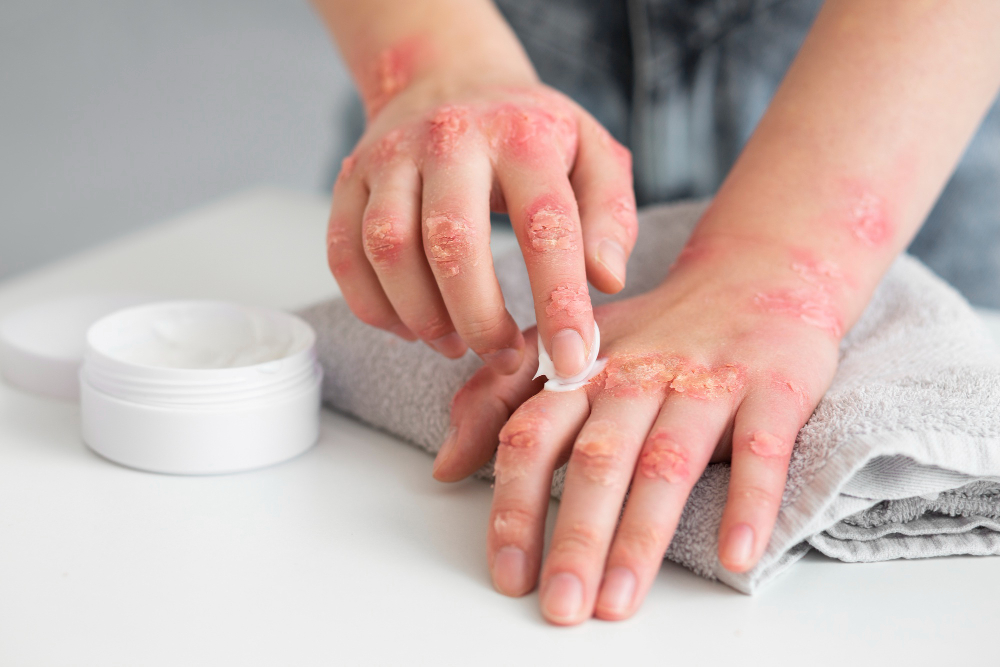
What Is Contact Dermatitis?
Many people notice red, itchy, or dry patches on their skin. Often, these signs point to contact dermatitis. This common skin condition happens when your skin touches something that causes irritation or an allergic reaction. For example, soaps, plants, or even jewelry can trigger it. Because contact dermatitis is so common, it affects people of all ages. According to the Centers for Disease Control and Prevention (CDC), millions of people experience skin irritation each year. While it is not contagious, it can be uncomfortable and sometimes even painful. If you have sensitive skin, you may be at higher risk. Understanding contact dermatitis helps you care for your skin and avoid future problems.
Common Symptoms of Contact Dermatitis
Usually, symptoms of contact dermatitis appear soon after your skin touches an irritant. However, sometimes they may show up after a few hours. For many, these symptoms can be mild. But for others, they can be severe. Here are some signs to watch for:
In some cases, the rash may spread if you keep touching the irritant. If you notice these symptoms, it is important to find out what caused them. Early care can help prevent further irritation.
Causes and Common Irritants
Contact dermatitis has two main types: irritant and allergic. First, irritant contact dermatitis happens when something damages your skin’s outer layer. Second, allergic contact dermatitis occurs when your immune system reacts to a substance. Both types can cause similar symptoms. But the triggers are different. Here are some common causes and irritants:
Because everyone’s skin is different, some people react to things that do not bother others. For example, those with sensitive skin are more likely to develop a rash. According to the American Academy of Dermatology, skin irritation is a top reason people visit dermatologists.
How Contact Dermatitis Is Diagnosed
Doctors use several steps to diagnose contact dermatitis. First, they will ask about your symptoms and when they started. Next, they may check your skin and look for patterns. Sometimes, your doctor will ask about your job, hobbies, or new products you have used. In some cases, they may suggest a patch test. During this test, small amounts of possible irritants are placed on your skin. After a few days, the doctor checks for reactions. This helps find the exact cause of your skin rash. Because skin irritation can look like other conditions, a careful exam is important. The CDC and other health experts recommend seeing a doctor if your rash is severe or does not improve.
Treatment Options for Contact Dermatitis
Treating contact dermatitis starts with avoiding the cause. Once you know what irritates your skin, you can take steps to stay away from it. However, sometimes you may need extra help. Doctors often suggest:
For severe cases, your doctor may prescribe stronger creams or oral medicines. According to the World Health Organization (WHO), most people recover fully with proper care. However, it is important to avoid scratching, as this can lead to infection.
Tips for Managing and Preventing Contact Dermatitis
While contact dermatitis can be bothersome, you can take steps to prevent flare-ups. For example, you can:
Because prevention is key, always read labels and know what is in your products. If you live in a city with high pollution, you may need to wash your skin more often. Sensitive skin care routines can help reduce your risk. If you notice a rash that does not go away, consider seeing a dermatologist for advice.