
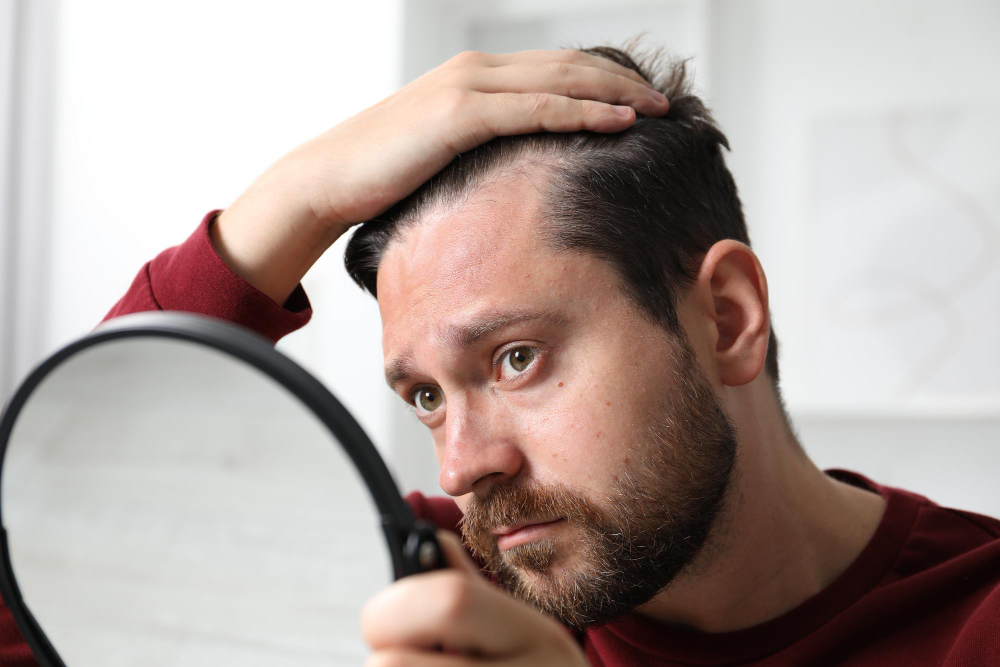
What Is Male Pattern Baldness?
Male pattern baldness is the most common type of hair loss in men. It is also called androgenetic alopecia. Usually, hair loss starts at the hairline or the top of the head. Over time, the hair becomes thinner and may stop growing in certain areas. For many men, this process happens slowly. However, some notice changes more quickly. Male pattern baldness affects millions of men worldwide. In fact, by age 50, about half of all men will notice some hair loss. Because it is so common, many people want to know more about its causes and treatments.
Common Symptoms of Male Pattern Baldness
Male pattern baldness has clear signs. Early detection can help you manage it better. Although symptoms may differ, most men notice:
Sometimes, hair loss may start in your twenties. Yet, for others, it begins later. Because the process is slow, you may not notice at first. Eventually, the hair loss pattern becomes more obvious.
Causes and Risk Factors
Male pattern baldness causes are linked to both genes and hormones. The main cause is a hormone called dihydrotestosterone (DHT). DHT can shrink hair follicles, making hair thinner and shorter. Over time, these follicles may stop producing new hair. However, not everyone is equally affected. Several risk factors increase your chances:
Because genes play a big role, you may notice similar patterns in your relatives. Additionally, some medicines or health issues can speed up hair loss. Still, most cases are due to inherited factors.
How Male Pattern Baldness Is Diagnosed
Doctors can often diagnose male pattern baldness by looking at your hair and scalp. Usually, a physical exam is enough. However, sometimes, they may ask about your family history. In some cases, your doctor might:
Because other health issues can cause hair loss, it is important to get the right diagnosis. Early diagnosis helps you explore modern hair loss treatments sooner.
Modern Treatment Options
Today, there are several modern hair loss treatments for male pattern baldness. Some options help slow hair loss, while others can regrow hair. Although results vary, many men see improvement. Common treatments include:
Because each treatment works differently, your doctor can help you choose the best option. Some men use a mix of treatments for better results.
Lifestyle Tips for Managing Hair Loss
While treatments help, lifestyle changes can also make a difference. For example, taking care of your scalp and hair may slow hair loss. Here are some helpful tips:
Because healthy habits support hair growth, these steps are worth trying. Even small changes can help you feel more confident.
Prevention and Early Intervention
Although you cannot always prevent male pattern baldness, early action can help. For instance, if you notice thinning hair, talk to your doctor soon. Early use of modern hair loss treatments may slow the process. You can also:
Because prevention is easier than reversing hair loss, early steps matter. While not all hair loss can be stopped, many men find that quick action leads to better results.