
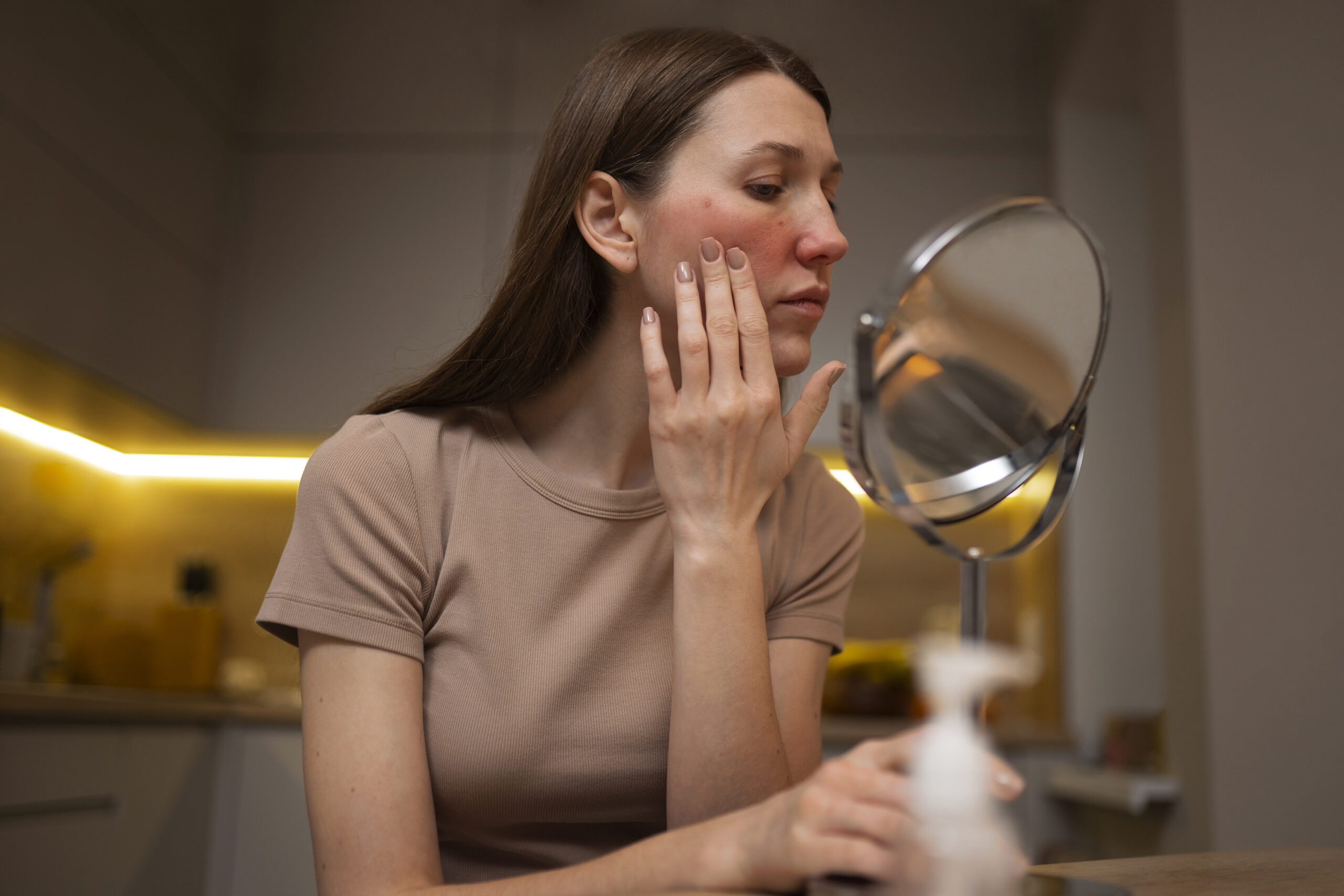
What Is Rosacea?
Rosacea is a common skin condition. It causes redness, visible blood vessels, and sometimes small bumps on the face. Many people mistake it for acne or a sunburn. However, rosacea is a long-term issue that can come and go. Early treatment can help control symptoms. The right rosacea treatment options can make a big difference in your skin’s health.
Common Symptoms and Triggers
Rosacea often affects the cheeks, nose, chin, and forehead. Symptoms can vary, but the most common ones include:
Triggers can make rosacea worse. For example, hot drinks, spicy foods, sun exposure, stress, and alcohol often lead to flare-ups. Even changes in weather can affect your skin. Knowing your triggers is key to managing rosacea.
Causes and Risk Factors
Doctors do not know the exact cause of rosacea. Still, several factors may play a role. Genetics, immune system reactions, and certain bacteria on the skin can all contribute. Some people are more likely to get rosacea than others. For instance, you may be at higher risk if you:
Because these factors are not always in your control, focusing on treatment and prevention is important.
Rosacea Treatment Options
There are many rosacea treatment options available today. Your doctor may suggest one or more of the following:
For best rosacea treatments, your doctor will choose what fits your needs. Sometimes, a mix of treatments works best. Always follow your doctor’s advice for safe and effective care.
How to Manage Rosacea Flare-ups
Managing flare-ups is a big part of living with rosacea. Here are some practical tips to help reduce rosacea flare-ups:
In addition, following a simple skincare routine can help. For example, cleanse gently, moisturize, and use sunscreen. These rosacea skincare tips can keep your skin calm and healthy.
Prevention and Lifestyle Guidance
While you cannot always prevent rosacea, you can lower your risk of flare-ups. Here are some helpful steps:
Because lifestyle changes can make a big difference, try to build healthy habits. Over time, these steps may help you feel more in control of your skin.
When to See a Specialist
If your symptoms do not improve with basic care, it is time to see a dermatologist. For example, if redness, bumps, or burning get worse, a specialist can help. They can offer advanced rosacea treatment options and guide you on how to reduce rosacea flare-ups. Early care often leads to better results.
In summary, rosacea is a common skin problem, but many treatments and tips can help. If you have concerns, consult a dermatologist for personalized rosacea management advice.